| |
|
Sealing Ceramic Tile Showers
It is Critical to Seal Ceramic Tile Showers
Periodically to Prevent Mold and Mildew Growth
By Mark J. Donovan
|
|
Sealing ceramic tile showers should
be done every year or so. When it comes to keeping ceramic
tile showers looking like new, besides wiping them dry after every use, you must
also periodically seal ceramic tile showers. Grout and some ceramic tiles are
porous and as a result absorb moisture. If the ceramic tile shower is not sealed
water can penetrate into the tile and grout, and breed mold and mildew. In
addition, minerals in the water can also etch the surface of some glazed tiles.
Sealing ceramic tile showers protects them from absorbing water, and thus
prevents mold and mildew growth, as well as protects against tile pitting. |
|
|
In general, glazed ceramic tile
does not need to be sealed. In addition, some types of unglazed ceramic tile
do not need to be sealed. However all grout lines should be. To determine if
your unglazed ceramic tile needs to be sealed, apply a little water to the
surface of one of the tiles and see if the tile turns darker. If it does,
then the tile is porous and should be sealed.
Sealing ceramic tile showers is
easy to do and there are a number of tile shower penetrating sealers on the
market to choose from. |

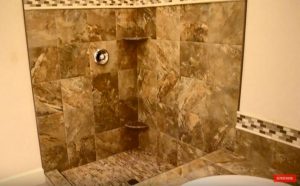
Photo by Mark Donovan |
|
|
There is latex or acrylic based tile
sealers, as well as mineral based sealers. The mineral based tile sealers have a
strong smell, whereas the latex or acrylic based ones do not. I recommend using
the latex based tile sealers. Each offers various lengths of time between
reapplication, however I find it is wise to seal a ceramic tile shower every
couple of years.
How to Seal
Ceramic Tile Showers
When it comes to actually sealing ceramic tile showers,
it is important to make sure that they are thoroughly dry first. Keep in mind that it can take up to
a week for shower wall tiles to completely dry, and even longer on tiled shower
floors.
|
|
Before applying a penetrating tile
and grout sealer, make sure to read the instructions on the packaging first. In
general, sealing ceramic tile showers is performed by applying tile sealer to
the tile and grout lines using a rag or sponge. After it has soaked in for a
couple of minutes, the excess material is wiped off the ceramic tile and grout
using a clean damp rag or paper towels. Note that you do not want to allow the
tile sealer to sit very long on the ceramic tile, as it is can become nearly
impossible to remove it once it has dried.
|
 |
For additional protection, apply a
second coat of tile sealer after you have allowed time for the first application to
fully dry.
See
My Shower Pan Ebook for More Details: For a detailed set of
instructions on building a shower pan, including pictures and a detailed
cross-sectional view of the make-up of a shower pan, see my “Shower Pan Membrane
Liner Ebook”.
For more
information on tiling a custom ceramic tile shower, see the
How to Tile a Custom Ceramic Tile Shower Ebook
from HomeAdditionPlus.com. It provides detailed instructions for every
step in the process of tiling a custom ceramic tile shower and is loaded with
instructional pictures!
|
Find a Qualified Ceramic Tile Contractor in Your Area |
|
Get Free Quotes. Easy, Quick and No
Obligations!
For the home improvement or home remodeling project that is
too big for you, check out our partner
NeedContractor. They are a national
resource for finding pre-screened, insured, and licensed home improvement and remodeling contractors in your local area.
|

|
|
Get Matched in 48 hours with Ceramic Tile
Contractors! |
See HomeAdditionPlus.com's
Ceramic Tile Calculator
How to Finance your Home Improvement Project -
can help provide funds for your new home improvement project if financing is
required.
Related Ceramic Tile
Information
Additional Ceramic Tile Resources from Amazon.com
|
| |
|