| |

|
Wood Siding Choices
Wood House Siding is still one of the
Most Popular House Siding Materials Still Used
By
Mark J. Donovan
|
|
Even today, with vinyl siding and
fiber cement siding options, wood siding is still extremely popular in the
United States. Be it clapboards or shakes and shingles, and whether it’s
installed horizontally or vertically, wood siding is still used on the majority
of homes throughout the U.S. For that natural look, and reasonably affordable
costs, other house siding products have a tough time competing with the variety
of wood siding choices that are available to the homeowner.
Wood siding choices are plentiful and include species such as pine, cedar, fir,
redwood, spruce and even manufactured wood products such as Masonite.
|
When choosing wood siding, it’s
usually best to select one that has been tried and tested in your particular
area of the country. Also, find out what wood siding choices are readily
available in your area. Finally check how to best protect the wood from rot and
insect damage and understand how the wood siding will age over time, e.g.
checking, splitting, or weathering. By following these few pieces of advice you
can be sure to select a wood house siding that will stand the test of time in
your region of the country and that will be reasonably affordable over the life
of the product.
Once the wood siding has been installed its important to make sure it is
properly sealed and protected from the elements. Ask your local home improvement
center what are the best type of sealers for your wood siding choice. Also,
before installing the wood siding allow it to acclimate to your jobsite for
several days. This is particularly important if you’ve selected a wood species
that is not indigenous to your region of the country and that has been recently
transported cross country.
|
|
Cedar Wood Siding
Cedar wood siding is one of the best wood siding products on the market. It
resists rot, insect infestation, and splitting, and comes in either clapboard
lengths or shakes and shingles. Due to the fact that it is a very dimensionally
stable wood it holds paint or stain well and resists swelling, cupping and
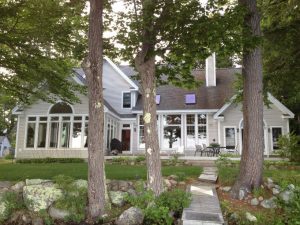
splitting. I’ve owned a home for over 10 years with cedar wood siding and it is
still holding up fantastically with it’s original coat of stain. On this
particular home we installed pre-primed cedar clapboards, smooth side out.
|
High quality grade Cedar wood siding
is expensive however, and regardless of its high resistance to moisture and
insect damage it too needs to be properly and regularly sealed, though
fortunately less frequently than other wood siding products.
Pine Wood Siding
Pine has been used for centuries and is probably the least expensive wood siding
product you can choose. However it is prone to cupping and twisting and it is
often difficult to get it in lengths that are knot-free. Pine is also not rot
resistant and as a result it needs frequent painting or sealing to protect it.
Also, frequent sealing helps to resist some of the cupping and twisting that is
associated with this wood species.
Spruce Wood Siding
Spruce wood siding is in the pine family and as a result has many of the same
advantages and disadvantages of pine wood siding. Vigilant care and maintenance
is required to protect it from cupping and warping, and preventing it from rot.
To ensure that it holds up to the test of time and weather conditions it needs
to be frequently sealed. It is commonly used on the east coast and typically
comes in long clapboard lengths.
|

Photo By: Mark
Donovan |
Fir Wood Siding
Fir wood siding is another type of house siding that is in the pine family.
Again, it is reasonably affordable and easy to install. It is most commonly used
on the west coast of the United States where the species is more prevalent. Due
to the fact that it is a soft wood it is commonly milled into various patterns
including board and batten, shiplap and tongue and groove.
Redwood Wood Siding
Redwood wood siding is commonly found on homes on the west coast of the United
States, due to the fact that it is indigenous to that area of the country.
Redwood has an exceptionally rich color and look to it. Also, due to the fact
that it has little pitch or resin in it, it takes a sealer extremely well and
requires less maintenance than other wood siding choices. It is also extremely
insect resistance. Due to its high quality it is ideal for virtually any
climate, albeit the cost of it can be prohibitive in areas where the species is
not grown.
Masonite Wood Siding
Masonite wood siding is a type of house siding that is constructed out of wood
chips, glue and resins, and through a combination of heat and pressure is molded
into clapboard pieces that resemble natural wood siding species. Masonite wood
siding has a number of benefits. It is inexpensive and easy to install, and it’s
also a green product. It’s also resistant to insect damage. It normally comes
pre-primed, painted or stained which saves in installation costs. The downside
to Masonite wood siding is that if it is not installed properly it is
susceptible to moisture damage. If water gets to the backside of it, or if the
top surface is damaged in anyway so that moisture can penetrate into it, it will
quickly swell and begin to break down. Also during the 1980s and 1990s a major
manufacturer of it was found guilty of improperly manufacturing it causing the
product to rot and deteriorate quickly. This said, I’ve owned a home for over 20
years that has Masonite wood siding and I’ve had few issues with it. I just make
sure to properly paint it every few years.
Wood Siding Installation and Maintenance Tips
Regardless of the type of wood siding you choose, remember that all wood siding
needs to be properly primed and sealed, including cut ends during the
installation process. Whenever possible lean towards the wood siding choices
that come pre-primed, painted or sealed. With wood shakes and shingles order
types that have been dipped or spray coated with a sealer at the factory.
To maintain wood siding power wash it periodically, however be careful to not
damage the wood grain in the process. Before painting or sealing wood siding,
make sure the house siding is completely dry. If you seal wood siding that
contains moisture, moisture that’s trapped underneath the sealer will cause the
sealer to quickly peel. Also, the wood siding will become susceptible to rot.

Patching Wood Siding Ebook
- If you require detailed instructions and pictures for patching wood siding see HomeAdditionPlus.com's
Patching Wood Siding Ebook. This Ebook provides very detailed
instructions, along with pictures for each key step in the
process of patching wood siding.
How to Finance your Home Siding Project -
can help provide funds for your new home improvement project if financing is
required.
Related Home Siding Information
|
|
|