HOME ADDITION PLUS

Helping Homeowners Every Day


                      Home   How-To   Store   Ebooks   Bid Sheets   Add House   About   Contact   Search   Subscribe to Newsletter  


New Home Construction Bid Sheet 
A must have if

hiring a contractor!

House Plans   


Installing Vinyl Siding - Making it Simple

By Colin McDougall


Installing vinyl siding can be a very rewarding process that could dramatically change the appearance of your home. For the most part, if you plan your job well and adhere to some simple guide lines, anyone could learn how to install vinyl siding to there home.

The first thing to consider when installing vinyl siding is what tools will be needed for the job. Basically with some common carpenter tools, like a, hammer, level, chalk line, screw driver set, tin snips and a good circular saw you can pretty much achieve what it is you need to do.

But if you plan on making a profession out of it, expect to pay in the thousands for a properly equipped truck for installing vinyl siding.

After you have gathered your tools, you will need to collect your materials to prepare the job. Below you will find a list of some fundamental items needed to start your siding project.

Sheathing/Backerboard for Installing Vinyl Siding

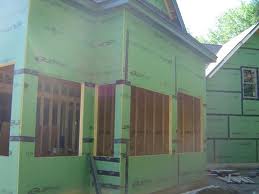
Vinyl siding should be installed over a sheathing that provides a smooth, flat surface. Since every district has different code requirements you may want to consult local building codes for sheathing requirements. Vinyl siding should never be installed directly to framing studs without sheathing. As an alternative to backer board, there is a variety of specific types of contoured foam under lays available for various styles of vinyl siding.

Weather Resistant Barrier when Installing Vinyl Siding

Vinyl siding should be installed over a continuous weather resistant barrier to stop the intrusion of incidental water. Weather resistant barrier systems commonly consist of a combination of exterior cladding, flashed wall openings and penetrations, weather resistant barrier material, and sheathing. Commonly used is black carpentry felt. When using felt be sure to check thickness requirements.

Find a Qualified Home Siding Contractor in Your Area

Get Free Quotes.  Easy, Quick and No Obligations!


For the home improvement or home remodeling project that is too big for you, check out our partner NeedContractor. They are a national resource for finding pre-screened, insured, and licensed home improvement and remodeling contractors in your local area.

Find Local, Pre-Screened Home Siding Contractors


Get Matched in 48 hours with Home Siding Contractors!

Flashing Required when Installing Vinyl Siding

Code-compliant flashing should be integrated with the weather resistant barrier and applied around windows, doors, and other openings. Flashing should also be applied to inside and outside corners, and the intersection of walls and roofing to prevent water seepage through the joints.

Once your outside wall has been covered with sheathing to provide a smooth flat surface, and your windows and doors have had flashing installed to channel any incidental water from collecting, you may now install the starter strip associated with the vinyl siding. This strip is an accessory applied directly to the surface of the building at the lowest part of the wall to be sided, and is used to secure the first course of siding to the home. This course will need to be checked for level as it is what the rest of the job relies upon for evenness.

With aluminum, galvanized steel, or other corrosion-resistant nails, you may now start installing the vinyl siding. As each style of panel may be different refer to installation instructions supplied. Cut the panels to length with a circular saw and trim with tin snips. As you nail the panels in place, be sure to leave about the thickness of as dime between the nail head and wall to allow for shifting. Check every 5th or 6th course for horizontal alignment. When portions overlap you must have about 1" to seal the joint.

The basic installation of vinyl siding is quite simple, but since there are codes governing how certain aspects are handled, you should inquire with a professional for specific trimming tasks and other more complicated vinyl siding installation practices.

All in all, you will find the task of re-siding your home manageable with only a few frustrations to contend with. But the reward will be well worth it.

For more help on new home construction, see HomeAdditionPlus.com’s Home Construction Contractor Bid Sheets. Home Construction Contractor Bid Sheets will help ensure that you find and hire the right home building contractor for your next home improvement, remodeling, or building project. In addition, they will help to ensure that your home improvement project is completed on time and on budget.

How to Finance your Home Siding Project -  can help provide funds for your new home improvement project if financing is required.

About the Author:

Article provided by the editors of http://www.vinyl-siding-n-windows.com - an online service providing free contractor referrals. To locate a vinyl siding contractor in your area visit vinyl-siding-n-windows.com.

Find the best siding company near you with GuideTo Siding. [Learn More]

Related Home Siding Information


- Installing Vinyl Siding -

[Back to Home Siding]


Home ] About ] Contact ] Search ]

Subscribe -  Subscribe to HomeAdditionPlus.com feed via Google  Subscribe to HomeAdditionPlus.com feed via MyYahoo  Subscribe to HomeAdditionPlus.com feed


to HomeAdditionPlus.comVideos

Advertise @HomeAdditionplus.com / Favorite Links / SiteMap / ToS

Copyright 2005-2008 by DIY HomeAddition Plus.com - A Do it Yourself Home Improvement Site

webmaster

web metrics