|
|
|
DIY Home Improvement Neophyte
Diary of My First Major Home Improvement
Venture
By: Mark J. Donovan
|
|
Within our first year of marriage my
wife and I bought our first home. Due to a preference to buy new home
construction and limited savings we purchased an unfinished home. It was a two
story gambrel style house with the upstairs completely unfinished. Suffice it to
say the day we closed on that home my wife and I became DIY home improvement
neophytes.
Growing up both of us had helped our parents on various home remodeling projects
of their own.
|
However none of those youthful diy
home improvement experiences compared to what laid ahead for us in owning our
first home. As with most first time homeowners we became diy home improvement
neophytes for two main reasons, lack of money and a desire to accomplish
something on our own, with admittedly the former being the chief reason.
Though the downstairs of our new home had all the essentials including a
kitchen, bathroom, bedroom, living room and dining room it was cramped quarters.
Consequently we were eager to begin finishing the upstairs of our new home.
After sketching out a floor plan, I started making regular trips to the local
home improvement store and purchasing 2x4s and nails. All I had for a vehicle
was a Volkswagen Rabbit so I could only carry about 2 dozen 2x4s at a time.
|
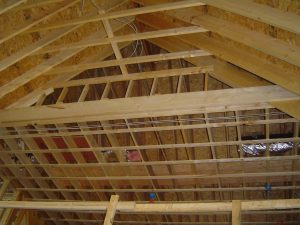
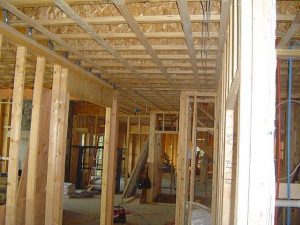
Due to the fact that I had some
youthful home construction experiences I was able to frame the upstairs of our
new home in a couple of weekends. To be honest, even for the complete diy home
improvement neophyte, framing internal walls is one of the easiest home
construction projects you can do. Compared to when I was finishing my home back
then, there are an infinite amount of resources today at one’s fingertips,
including HomeAdditionPlus.com, for providing framing instructions.
|
 |
|
|
Once I completed the interior wall
framing the upstairs really began to take shape and become a reality. However, I
was far from done. There were only a few electrical feeds from the main circuit panel
coming into the upstairs for electricity, and just the roughed-in supply and
drain lines for the plumbing. Again, more for a lack of money than anything else
I chose to do my own electrical wiring and plumbing. Fortunately, I had some
previous experience doing both of these projects as a teenager and I had a
Bachelor of Science degree in Electrical Engineering.
|
Suffice it to say roughing in the
electric was easy and roughing in the plumbing was not. The main difficulty with
the plumbing was that it included baseboard hot water heating, so I had to run
additional copper piping in crawl spaces and flooring to support the upstairs
heating zone. I also had to route the plumbing pipes to the various locations
for the bathroom fixtures which meant tearing up some of the subfloor. It was a
lot of work and required a lot of soldering of joints.
With all of the rough work completed I called in the local building inspector
and got approval to move forward with insulating the exterior walls and ceiling.
The home builder had installed insulation in the lower level ceiling to save
money so there was no insulation in the walls or attic area of my new home. My
wife and I spent two solid weekends insulating the upstairs of our home. Besides
the drywall project, it is the second worst job to tackle on your own. Even
fully clothed, and with masks and goggles on, we were still gasping for air and
choking installing all of that fiberglass insulation. But we got it done, and I
might add we did a good job. We past the next inspection with flying colors and
were on to the drywall.
| The drywall phase of our upstairs project was a major
endeavor. It took brawn and artistry and about 2 months of effort. I called
in my father for helping to hang the drywall. Hanging drywall on the ceiling
was particularly painful. All we used was a couple of homemade Ts made out
of 2x4s to hold the drywall up while we nailed it in place. By the way, I
broke down at that point and had the drywall delivered on a flat bed. I just
couldn’t figure out a way to carry the drywall in or on my Volkswagen Rabbit. I
did, however, bring home all of the rolls of insulation in that car. |
|
Though I had the drywall delivered, I
still had to haul it into the home and up the stairs. Nearly 100 sheets of 4x8
drywall panels had to be carried up. Again we were diy home improvement
neophytes that had more strength than money at the time, and admittedly less
knowledge. Today I would have popped out an upper story window and have a crane
lift and place the drywall panels into the upstairs area. Ah, by hindsight is
20/20. I continue on.
After hanging the drywall over a couple of weekends, we moved on to the taping
and mudding stage. Both my wife and I tackled this project over many weekends
and evenings. Taping and mudding drywall takes some practice and a bit of
artistry. It’s also filthy and dusty work and I would not recommend it to anyone
who had any other means to pay a pro to do it, at least if it’s a major drywall
project as was the case with us. But we got through it and moved on to the
finishing work of our upstairs.
First we painted all of the walls and textured the ceiling. Rolling a ceiling
gets pretty tough on the arms and neck, but after just a couple of weekends we
had completed all of the painting.
I then moved on to the electric which basically involved installing the outlets,
switches and light fixtures and turning on the circuit breakers that had
originally been wired into the main circuit panel. |

Photo by Mark Donovan |
Finishing the plumbing was a major endeavor. Installing the toilet and the
bathroom vanity and sink were fairly easy, and the tub had fortunately been
installed when the home was originally built. Once the fixtures were installed I
simply needed to fasten the plumbing supply hoses to the supply lines and make
the drainage connections. It was the installation of the baseboard heating that
was the real pain. It was during this phase of the project where I had my first
mishap. When I turned on water to the new heating zone I quickly discovered a
leak in one of my solder joints. I doused the lower level ceiling pretty good
with water but it dried out fairly nicely and required no repair. To solve my
plumbing problem I had to drain the water from the heating zone and reflow the
solder joint. It was a pain, but not the end of the world, which is the case
with most diy home improvement projects.
Once the electric and plumbing were operational, I moved on to installing doors
and doing interior trim work. The installation of the doors was easy as they
were prehung doors. A level, hammer and some finishing nails made quick work of
them. The closets required a bit more work as I had to box in their edges with
trim and 1x5 lumber before installing the bifold doors. Similarly installing the
interior window trim took some time. Fortunately I pre-stained all of
the trim before installing it so I did save myself some time and hassles by not
having to stain them on the walls after the fact.
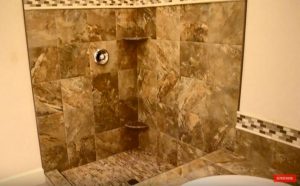
After finishing all of the interior trim work we installed carpeting in the
bedrooms and hallway, and tiled the bathroom floor. I left the installation of
the carpeting to the pros, but I did the tiling myself.
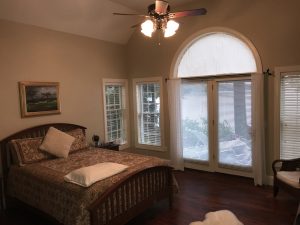
So after about 5 months of hard work we moved into our newly finished upstairs.
I estimated we saved about 50% of the cost of finishing the upstairs by tackling
so much of it on our own. Besides the cost savings we also took a lot of pride
in what we had accomplished. Even though we had been DIY home improvement
neophytes, we had complete schedule and cost control of our home improvement
project and we achieved exactly what we were looking for in our finished
upstairs. In addition, we were able to avoid borrowing any money for completing
it as we paid for it as we went along. We stayed in that house for only 2 years
before, believe it or not, repeating the process again on another unfinished
home. The sweat equity we had earned and the skills we learned allowed and
emboldened us to sell our first home at a pretty penny and move up to a larger
home and customize it even more.
For more help on building a new custom home, see HomeAdditionPlus.com's
New Home
Construction Bid Sheet.
The
New Home Construction Bid Sheet
provides you with the knowledge on how to plan a custom home building project,
and what to look for when hiring contractors for your new home construction. It
also includes a detailed cost breakdown table and spreadsheet for estimating
your own new home construction building costs.
How to Finance your Home Construction Project -
can help provide funds for your new home improvement project if financing is
required.
Related Articles
Home Designer Software
from Amazon.com
Free Home Addition
Price Quotes with No Obligation!
Fill out our 3-5 minute quick and easy form, and receive a free price quote
on a room addition from one of our prescreened and licensed home addition
contractors. This process is free and there is no obligation to continue once
you receive your room addition estimate.
|
|
|