|
|
|
Backfilling Foundations
Backfilling a Foundation takes Patience, Skill
and the Right Soil Type
By: Mark J. Donovan
|
|
Backfilling foundation walls is
somewhat of an art. If not done properly foundation walls can be knocked off
their footings or cracked. In addition, prior to backfilling a foundation,
preparatory work on and around the foundation is critical for ensuring a leak
free basement.
When backfilling foundations it is important that the concrete walls first have
adequate time to properly cure. In ideal weather conditions it normally takes up
to 28 days for concrete to fully cure. |
|
Until then the foundation walls
are not at their maximum strength and can be more easily damaged when
backfilling. Consequently in a perfect construction site world backfilling
of foundation walls should be held off approximately 1 month from when the
foundation walls were poured.
In addition, prior to backfilling
a foundation, the exterior walls should be sealed and insulated. Sealing
foundation walls, up to the expected finished grade of soil, can
dramatically help to prevent ground water from seeping through the porous
concrete material and into the basement.
|
 |
Likewise insulating
the foundation walls can help prevent the seepage of warm basement air into the
surrounding cool earth.
Also, prior to backfilling a foundation, a perimeter drain should be installed
around the foundation footing to help direct the flow of ground water away from
the home. In addition, any utility pipes that need to be brought through the
foundation walls should be installed and sealed up with hydraulic cement.
|
|
Finally, the basement concrete slab
should be poured prior to backfilling. By pouring the concrete slab you can help
to prevent the foundation walls from getting knocked inwards when backfilling
the foundation.
When actually backfilling a foundation it is best to use coarse grained soil and
start in the foundation corners. Backfilling soil should be pushed into place
rather than dropped into place. Using existing material from the excavation site
is not always wise, particularly if it has high concentrations of clay or
decaying matter. |
|
Clay soil does not drain well and decaying matter will lead to eventual
depressions around the foundation. In addition, boulders should not be used
as they can crack the foundation walls. As the soil is pushed into place
around the foundation it should be compacted often. Finally, the finished
grade should be gently sloped away from the home. The grade should be at
least 1 inch per linear foot, away from the foundation, for the first 5 to
10 feet. |

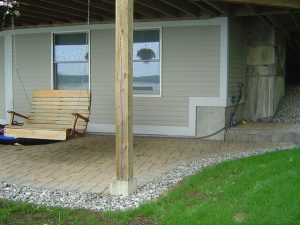
Photo By Mark Donovan |
|
Find a Qualified Home Remodeling Contractor in Your Area |
|
Get Free Quotes. Easy, Quick and No
Obligations!
For the home improvement or home remodeling project that is
too big for you, check out our partner
NeedContractor. They are a national
resource for finding pre-screened, insured, and licensed home improvement and remodeling contractors in your local area.
|

|
|
Get Matched in 48 hours with Home Remodeling
Contractors! |
For more help on Custom Home building, see HomeAdditionPlus.com's
Home
Addition Bid Sheets.
The
Home
Addition Bid Sheets will help ensure that your home
building project goes smoothly and is
completed on time and budget.
How to Finance your Home Remodeling Project -
can help provide funds for your new home improvement project if financing is
required.
How to Build,
Maintain and Backfill Concrete Foundation Walls
Additional Home and Building Resources
Free Home Addition
Price Quotes with No Obligation!
Fill out our 3-5 minute quick and easy form, and receive a
free price quote on a home addition from one of our prescreened and licensed
home addition contractors. This process is free and there is no obligation to
continue once you receive your home addition price estimate.
|
|
|