| |
|
Drywalling a Basement Ceiling
The
Benefits and How-to Procedures for Drywalling a Basement Ceiling
By Mark J. Donovan
|
|
When finishing a basement the question often comes up on whether or not to go
with a dropped ceiling or a drywalled basement ceiling. A dropped ceiling offers
a number of advantages, chief among them is that you have easy access to
mechanical elements residing up between the floor joists. Drywalling a basement
ceiling on the other hand also has some advantages and chief among them is the
fact that a drywalled basement ceiling impacts headroom height less. Basements
are notorious for having limited headroom and to meet building codes you may
have no choice but to go with a drywalled basement ceiling.
|
A drywalled basement ceiling also looks better than a dropped ceiling in many
cases. This said, there are new dropped ceiling tiles and solutions coming on
the market that give a finished drywall basement ceiling a run for its money.
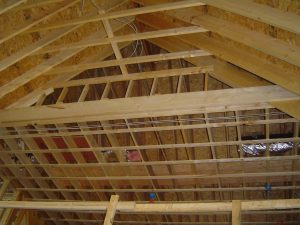
Drywalling a basement ceiling requires an initial inspection of the basement
ceiling and some upfront planning. Often soffits need to be framed in around
duct work. In addition, in some cases plumbing or wiring may need to either be
moved, or again additional soffit framing installed around them. In some cases
certain areas of the basement may not be worth including in the basement
remodeling due to the significant cost of having to modify various mechanical
items in or near the basement ceiling.
|
|
Due to the fact that the first level floor above the basement typically gets a
lot of use it’s also a wise idea to install 1”x3” furring strips perpendicular
to the upper level floor joists. The furring strips should be installed on 16
inch centers. The furring strips help to isolate the drywall basement ceiling
from the floor joist deflections that inevitably occur. The furring strips thus
mitigate any nail pops and seam cracking in the drywall basement ceiling.
How to Drywall a Basement Ceiling
Drywalling a basement ceiling is done effectively the same way as drywalling any
other ceiling.
|
Each row of drywall panels should be offset from each other by a half a sheet of
drywall to reduce long running seams and to better interlock the drywall panels.
The drywall panels should be attached to the furring strips using drywall screws
or nails located on 16 inch centers. Typically two people are necessary for
installing a drywall basement ceiling, however there are drywall lifts that can
be rented to help lift, position, and hold the drywall panels in place while you
fasten them to the basement ceiling.
In regards to the type of drywall to use, theoretically you should be able to
use standard drywall as long as the basement is dry and the humidity is going to
be kept low under control. This said, a moisture resistant drywall would be a
better choice to use in a basement if your budget can afford it. The cost
differential is relatively minimal compared to the entire cost of the job.
Taping and mudding a drywalled basement ceiling is done the same way as any
other drywall project. Mud, or drywall joint compound, should first be applied
to the drywall nail/screw areas and seams. As soon as mud is applied over each
seam, tape should be embed into the seam and a skim coat of joint compound
applied over it. A 6 inch taping knife works best for this task.
After the first coat of mudding has dried use your 6 inch taping knife to knock
off the high spots on the seams and nail/screw areas and then apply a second
coat of mud using a 12 inch taping knife. Feather out the seams and nail/screw
areas using the wider taping knife. Once the second coat of mud has dried repeat
the process for the third and final skim coat, again feathering out the seam and
screw/nail hole areas even wider. When the final skim coat has dried, lightly
sand the drywalled basement ceiling with a pole sander. Finally prime and paint
the sealing. Alternatively after priming it you can apply a textured skim coat
to the ceiling surface.
|
Find a Qualified Drywall Contractor in Your Area |
|
Get Free Quotes. Easy, Quick and No
Obligations!
For the home improvement or home remodeling project that is
too big for you, check out our partner
NeedContractor. They are a national
resource for finding pre-screened, insured, and licensed home improvement and remodeling contractors in your local area.
|

|
|
Get Matched in 48 hours with Drywall Contractors! |
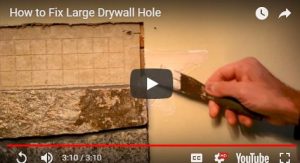
How to Repair a Large Drywall Hole Ebook
- If you have a large hole in your drywall and need to repair it,
you can
either call in a drywall contractor and pay an arm and a leg, or you can fix
it yourself. The "How
to Repair a Large Drywall Hole Ebook" will show you how to
repair your damaged wall so that it looks as good as new.
See HomeAdditionPlus.com's
Drywall Calculator
For more help on new home construction, see
HomeAdditionPlus.com’s
Home Construction Contractor Bid Sheets.
Home
Construction Contractor Bid Sheets
will
help ensure that you find and hire the right home building contractor
for your next home improvement, remodeling, or building project. In addition,
they will help to ensure that your home improvement project is completed on time and on budget.
Drywall Ceilings
Additional Drywall Resources from Amazon.com
Drywall Tools From Amazon.com
Get Free
Drywall and Plastering Price Quotes,
No Obligation! Fill out our 3-5 minute quick and easy form, and
receive a free price quote on drywall and plastering installation from one of our prescreened and licensed
drywall contractors. This process is free and there is no obligation to continue
once you receive your drywall installation price estimate.
|
|
|