|
|
|
How to Prevent Basement Water Leaks
Tips on Preventing a Wet Basement and Fixing
Basement Water Leaks
By: Mark J. Donovan
|
|
Having a basement that is free from
water leaks is not a thing of chance. There are a number of steps that you can
take to prevent basement water leaks and ensure a dry basement. Some of the
steps to preventing basement water leaks should be done during the construction
of the home. In other cases, steps can be taken to prevent and fix basement
water leaks after the home is built.
Preventing
Basement Water Leaks When Constructing a Home
One of the best ways to prevent a leaking basement is to install the foundation
walls properly so that there is less chance of them cracking and settling.
|
|
Cracked basement walls are often the
source of many wet basements. To mitigate the risk of foundation cracks and
basement water leaks, proper excavation is essential. All topsoil and clay
material should be removed from the foundation site area. Several inches to a
foot of large 2 inch diameter, angular gravel should then be placed into the
excavated hole and compacted. By taking these steps the concrete footings are
ensured to be resting on solid and stable earth. By ensuring a stable footing
there is less likelihood that foundation settling will occur, which is often
what causes cracked foundation walls.
|
 |
|
|
Next, when installing the foundation,
a network of gravel and drainage pipes should be installed around the base of
the foundation, at the footing level, that channels water away from the home.
The perforated PVC drain piping should extend away from the home to a low spot
on the property far away from the foundation. By creating a perimeter drain
system around the foundation, any water that drains down around the basement
walls will hit the perimeter foundation drain and be channeled away from the
home to the low spot on the property. A perimeter drain system is one of the
best solutions for preventing basement water leaks.
|
The second step to take to prevent
basement leaks during the construction phase of the home is to seal the exterior
basement walls. The basement sealer should be applied from the footing level up
to the expected finished grade of the soil.
Third, when backfilling around the basement foundation walls sandy soil material
should be used to allow the surface water to easily drain away from the
foundation walls. The backfilling material should also be compacted firmly to
remove any air in the soil adjacent to the foundation walls to prevent eventual
soil settling and depressions to form.
Finally, when grading the soil around the basement walls the soil should be
sloped away from the home. The slope should be at least 1 inch per foot for the
first 5 to 10 feet around the perimeter of the foundation walls.
How to Prevent Basement Water
Leaks after the Home is Built
If your home is already built and you are contending with a leaky and wet
basement there are a number of things you can do to prevent basement water
leaks.
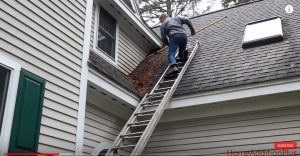
First and foremost, check to make sure gutter drain spouts are draining rain
water away from the home foundation. Also confirm that the finished grade soil
slopes away from the home and that there are no low spots or depressions around
it. If there are issues with the finished grade soil then have the soil around
the home’s foundation re-graded. Typically the finished grade should be sloped
at least 1 inch per foot away from the home.
|

Photo by Mark Donovan |
Second, look for hairline cracks in the basement walls and floor. If you observe
any, repair them with hydraulic cement. However, before just squeezing some
hydraulic cement into the cracks open them up first a bit (approximately ¼ to ½
inch in width) with a hammer and chisel, and remove any loose debris from the
cracks with a stiff bristle brush. Then apply the hydraulic cement to the
cracks. Make sure to firmly pack the hydraulic cement into the cracks and to
wipe off any excess material using a trowel.
If these issues do not cure your basement water leaks, then you may have no
choice but to consider putting in a perimeter drain around the foundation walls.
This is an expensive endeavor for preventing basement water leaks, but maybe
your only choice. To install a perimeter drain it will require excavating around
the foundation wall down to the footing level and then installing the gravel and
perforated drain pipes as I described earlier.
|
Find a Qualified New Basement Remodeling Contractor in Your Area |
|
Get Free Quotes. Easy, Quick and No
Obligations!
For the home improvement or home remodeling project that is
too big for you, check out our partner
NeedContractor. They are a national
resource for finding pre-screened, insured, and licensed home improvement and remodeling contractors in your local area.
|

|
|
Get Matched in 48 hours with New Basement
Remodeling
Contractors! |
How to Finance Finished Basement Project -
can help provide funds for your new home improvement project if financing is
required.
Related Articles
Additional Basement Remodeling Resources
from Amazon.com
Get Free Basement Remodeling Price Quotes
with
No Obligation!
Fill out our 3-5 minute quick and easy form, and receive a free price quote
on basement remodeling from one of our prescreened and licensed basement
remodeling contractors. This process is free and there is no obligation to
continue once you receive your basement remodeling price estimate.
|
|
|