Have you ever wondered what those funny windows you see on buildings were
called?
According to wikopedia, The definition of a window is "... an opening in an
otherwise solid, opaque surface through which light and air can pass. " By
definition, this includes the early windows which didn't have any protection
from the wind or rain. Early windows used shutters to protect the inside of the
house from the elements. Modern windows may have be single, dual, or triple
paned.
There are may different window styles, those more common today which are usually
dictated by the weather conditions common to the area. Coastal climates, with
stronger winds, tend to have smaller outward-opening windows while inland areas
tend to have larger windows, with commonly open inwards.
* Replacement: is a framed window designed to slip inside the original window
frame from the inside after the old sashes are removed
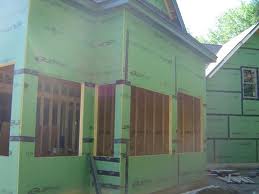
* New construction: a window with a nailing fin designed to be inserted into a
rough opening from the outside before applying siding and inside trim. Common
styles are:
* Double-hung sash window: a Vertical style window with two parts (sashes) which
overlap slightly and slide up and down inside the frame.
* Single-hung sash window: one sash is movable and the other fixed.
* Horizontal Sliding sash window: has two or more sashes that overlap slightly
but slide horizontally within the frame. If there are 3 part, the center
typically is a fixed panel.
* Casement window: An outward-opening window with either side-hung, top-hung, or
combination of sash types. Often they have fixed panels on one or more sides of
the sash. These are opened using a crank, by friction stays, or espagnolette
locking.
* Tilt: a window which can open inwards at the top or can open hinged at the
side.
* Jalousie window: A window comprising many slats of glass that open and close
like a Venetian blind usually using a crank.
* Skylight: A flat, sloped, or bubble window built into a roof structure for
daylighting.
* Bay: A multipanel window, with at three sections set at different angles to
create an expanded area for shelving/sitting while allowing more light into the
room that a flat window. The window creates a "seat board", a small seating area
or shelf often used for plants or items that would take up floor space. A bay
window may be rectangular, polygonal or arc shaped. If arc-shaped it is a bow
window.
* Bow: a type of Bay window, but arc shaped with four or more glass sections to
simulate a rounded appearance.
* Fixed: A window that cannot be opened. A
non-opening window is sometimes called a "light" because its function is limited
to allowing light to enter without any outside air.
* Picture: A very large fixed window in a wall, which provides an unimpeded view
"as if framing a picture". Classic styles:
* Clerestory: A fixed, vertical window set in a roof structure or high in a
wall, used for daylighting. You'll see these in the old churches around the
world, like Notre Dame. Clerestory lights are any rows of windows above eye
level for providing light.
* Oriel: Projects from the wall, and were originally a form of a porch. Often
seen on upper stories of older buildings. Often supported by brackets, or by
corbels (a type of architectural bracket), they do not reach the ground. These
are the rounded columnar windows you see on older buildings.
* Palladian: A large arched window which is divided into three parts. The center
section is larger than the two side sections. Renaissance and classical
architecture often have Palladian windows.
About the Author: Eileen church, webmaster for
http://www.windowsf.com is a big fan of windows
and the use of windows. She operates a web site that is devoted to windows and
window resources. Her email is
eileen@windowsf.com
For more information on
Installing a New Window, see the
Installing a New Window Ebook from
HomeAdditionPlus.com. The Installing a New Window Ebook provides
easy to understand, step-by-step instructions, on how to remove an old window
and install a new one. Pictures are included for every key step in the process.
Get Free Window Price Quotes,
No Obligation!
Fill out our 3-5 minute quick and easy form, and receive a free price quote
on windows from one of our prescreened and licensed window contractors. This
process is free and there is no obligation to continue once you receive your
window replacement price estimate.