|
If the roof snow is deep enough or
high in water content, the weight of the snow could exceed the safe carrying
capacity of the roof and could cause the roof to sag and deflect, or even worse
collapse. In addition, if the heavy snow load remains on the roof for an
extended period of time, the roof sagging or deflection can become permanent.
Fortunately most roofs are constructed to local building codes that factor in
the average expected winter snow loads, so these types of issues should not be
too significant of a concern. However, the roof load designs are based on
averages, and so when there is a high accumulation of roof snow it is usually
wise to remove some of it.
|
|
The second major reason for roof snow removal is that even with a properly
insulated attic and sufficient roof ventilation, ice dams can form under the
roof snow. Ice dams can cause water to get up underneath the roof shingles. When
this happens water will find its way into the attic and eventually the living
areas of the home. In addition, refreezing water under the roof shingles can
cause the shingles and the roof sheathing to become damaged.
The best tool for roof snow removal
is the snow rake. It consists of a long telescopic handle and a large flat blade
on the end of it with a plastic covering over the blade edge.
|
The roof snow rake allows you to
remove snow from the roof without having to get up on the roof. Working on a
snow covered roof is extremely dangerous and should not be done by a homeowner
without the proper safety equipment.
| When removing roof snow with a snow rake simply extend the
rake up approximately 2 feet over the edge of the roof and pull the snow
towards you with the rake. Make sure you are not standing directly under the
roof to avoid getting hit by the falling snow and icicles. After removing
the first couple of feet of snow from the edge of the roof, repeat the
process again to effectively take away 4 feet of snow from the roof edge. If
you can still reach, and feel compelled to make another pass, remove an
additional 2 feet of roof snow. |

Photo by Mark Donovan |
Note, however, that you do not typically need to remove all of the roof snow. By
clearing away 4 to 6 feet from the roof edge you can dramatically decrease the
stress on the roof and eliminate the risk of ice dams.
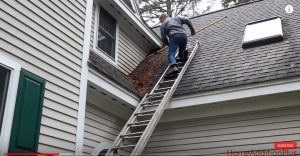
If the roof snow is extremely deep, such as 24 inches or more, you may need to
use a snow shovel to remove the roof snow. Again, I highly suggest not climbing
up on the roof if you can at all avoid it. Not only do you risk falling from the
roof, but by standing on it you further stress the roof load capacity. The use
of a ladder, along with the snow shovel, is often all that is required to reach
and remove the first 2 to 4 feet of snow from the roof edge.
Snow also has a tendency to accumulate more in roof valleys and near chimneys
and vent stack pipes. So when performing roof snow removal make sure to also
clear out snow in these areas as well, as they are often high structural stress
areas on the roof.
|
Find a Qualified Roofing Contractor in Your Area |
|
Get Free Quotes. Easy, Quick and No
Obligations!
For the home improvement or home remodeling project that is
too big for you, check out our partner
NeedContractor. They are a national
resource for finding pre-screened, insured, and licensed home improvement and remodeling contractors in your local area.
|

|
|
Get Matched in 48 hours with Roofing
Contractors! |
For help on Shingling Your Home's Roof, see HomeAdditionPlus.com’s
Asphalt Shingle Roofing Bid Sheet.
The
Asphalt Shingle Roofing Bid Sheet
will
help to ensure
that
your roof won't end up with a blue tarp over it and a dumpster sitting in your
yard for weeks
as you wait for the roofing contractor to come back and finish roofing your
home.
Asphalt Shingle Roofing Calculator
Related Roof Information
How to Finance your Roof Project -
can help provide funds for your new home improvement project if financing is
required.
|