HOME ADDITION PLUS

Helping Homeowners Every Day


                      Home   How-To   Store   Ebooks   Bid Sheets   About Us   Contact Search   Subscribe to Newsletter    


Home Addition Bid Sheet


Home Improvement Tools from Amazon


Visit My

Amazon

Tool Store


How To Install Furring Strips to Concrete Basement Walls


By Mark J. Donovan


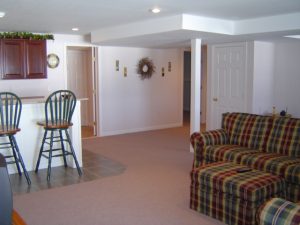
If you are a homeowner planning to finish a basement you will most likely need to install furring strips to the concrete walls so that the walls can be sheetrocked or drywalled.

Attaching furring strips to concrete walls can be easily done using 2”x2”s or 2”x3” kiln dried wood studs, liquid nail glue, and some fluted concrete nails.

Due to moisture in the basement, I prefer to use a 2”x4” pressure treated stud laid flat along the bottom of the wall.

Lay the stud on its flat side up against the wall. The furring strips will sit on top of the pressure treated stud, such that there is effectively a moisture barrier between the basement floor and the kiln dried studs.

The kiln dried studs should be placed on 16 inch centers along the wall, again resting on the pressure treated 2”x4”. The kiln dried studs should run the entire height of the concrete wall.

To secure the bottom plate and studs to the wall, I first run a bead of Liquid Nails (designed to adhere to concrete and wood), along the entire length of the bottom plate/stud. If you are using 2”x3”s for the furring strips, the glue should be applied to the wider side, such that when the stud is installed, you effectively have the flat side of the stud attached to the wall.

Start with the application of glue on the pressure treated bottom plate.

Next, using a drill and a masonry bit, drill pilot holes into the bottom plate. The holes should be placed every 16 inches along the length of the plate and should penetrate the concrete walls approximately 1.5”. Then using 3” fluted nails and a 3-5 lb sledge hammer, pound the nails into the holes. Note: I prefer to drill and pound a nail, one hole at a time to eliminate alignment problems.

Once the bottom plate has been installed, repeat the process on the vertical kiln dried studs. Install one stud at a time, again on 16 inch centers. Make sure they stand straight and level.

Find a Qualified Home Building Contractor in Your Area

Get Free Quotes.  Easy, Quick and No Obligations!


For the home improvement or home remodeling project that is too big for you, check out our partner NeedContractor. They are a national resource for finding pre-screened, insured, and licensed home improvement and remodeling contractors in your local area.

Find Local, Pre-Screened Home Buidling Contractor


Get Matched in 48 hours with Home Building Contractors!

To help hold the vertical stud in place while you are drilling holes and pounding in concrete nails, I like to toe nail the bottom of the stud into the bottom pressure treated plate first.

Once the glue has set up, the furring strips will be strongly fastened to the wall and ready for drywall.

Note, however, you may want to apply pink board insulation in between the studs to provide some level of insulation between the concrete walls and the finished sheetrocked wall.  Simply cut the insulation to the proper width, apply some Liquid Nails to the back side of the insulation board, and then press the insulation in-between the studs.

Planning to remodel your basement and want to be your own General Contractor or looking to hire one? Do you know what questions to ask to ensure your hiring the right contractor for your project? The Basement Remodeling Bid Sheet from HomeAdditionPlus.com provides an extensive contractor questionnaire, to help you ask the right questions to potential contractors, thus ensuring you get the project completed properly and on time and budget. In addition, it provides estimated project costs and time intervals for each phase of the project, as well as extensive advice for the homeowner. [Learn more]

How to Finance your Home Project -  can help provide funds for your new home improvement project if financing is required.


Additional Framing and Carpentry Resources


Framing and Carpentry Tools from Amazon.com


-  How To Install Furring Strips to Concrete Basement Walls  -

[Back to Framing]


Follow HomeAdditionPlus on Twitter


to HomeAdditionPlusVideos / Subscribe to HomeAdditionPlus.com feed

Advertise / Favorite Links / SiteMap / ToS / Privacy Policy / Disclosure Policy

Copyright 2005-2010 by DIY HomeAddition Plus.com - A Do it Yourself Home Improvement Site

webmaster

web metrics