So you’ve finally decided to get your favorite music throughout your house.
What’s next? Where do you go from here? That depends upon your requirements and
weather this will be an installation in an existing home or a music system in a
new construction home.
First, you need to decide which rooms you would like to install your speakers.
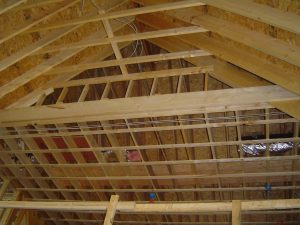
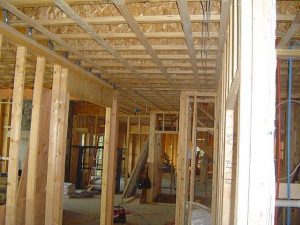
The installation will obviously be much easier during construction than in an
existing home. Once you make the decision on which rooms to include, you have
two choices; in-wall or in-ceiling.
In-ceiling speakers tend to draw less attention to themselves. In all but basic
background music applications, in-wall speakers usually sound better, everything
else being equal. In-wall speakers have other problems, however. They are
usually harder to integrate aesthetically in the room. They also take up
valuable wall space that can be used for art or furniture.
Typically, round speakers are used for in-ceiling installations
and rectangular speakers are used when installing in the wall.
Round speakers integrate better with other ceiling fixtures,
such as smoke detectors and recessed light cans, which tend to
be round as well.
In addition, because most round speakers have
coaxially located drivers, you are the same distance from both no matter where
you are in the room. This leads to more even frequency response throughout the
room. Rectangular speakers tend be better suited to in-wall, rather than
in-ceiling, applications.
It is best to keep the speakers at least two feet or so from adjacent walls or
other boundaries that can cause response problems. Optimally, in wall speakers
should be at, or close to, ear level. Place in-ceiling speakers so they are
symmetrical with ceiling fixtures and the room.
Usually stereo pairs of speakers are used in each room. Another approach that
works well is to sum the some signals into mono. You can then run the system in
mono for most areas that use in-ceiling speakers. The mono approach allows you
to get more uniform coverage, rather than standing under a speaker that is only
playing the left channel for example.
You can also use one speaker for areas like small bathrooms and still get both
channels of the music. There are speakers with dual voice coils and inputs for
both the left and right channels on a single speaker that are also used for this
type of application. It can be demonstrated that the summed mono approach using
a single, standard voice coil speaker usually sounds better, however.
Multi-room speaker systems can be set up as single zone or multiple zone
systems. In a single zone system, all the speakers play the same source. With a
multi-zone audio system, the system is divided into two or more areas that can
play different sources. This flexibility is really nice when different occupants
want to listen to different music at the same time. For example, with a three
zone system, you could listen to three different sources simultaneously in three
different areas of your house.
With a single zone system, it is still desirable to have independent volume
control over each pair of speakers or to turn off any pair completely. This is
accomplished by using a speaker level volume control for each room. These are
usually a just round knob, although other styles, such as sliders, are used as
well.
Multi zone systems are usually controlled by some type of keypad, system remote
control, or wall mounted touchscreen. Typically, there is one of these control
interfaces for each zone. There is an old saying in racing “Speed costs money.
How fast do you want to go?” So it is with multi zone music system controls.
Control costs money. How much do you want?
A standard knob style volume control is under $100. Step up to a keypad for more
control and you are looking at $250 to $500. Touch screen controls offer the
ultimate in simplicity and flexibility. In addition, touch screens allow
feedback, such as volume, radio station, and music server information, to be
displayed on the touch screen. Touch screen controls begin at about $500 and can
go to $20,000 each, depending upon size and options. The more sophisticated
controls allow you to turn on your music and choose sources from each room. It’s
as easy as turning on a light.
Some of the more advanced controls can operate independently, some require a
central processor. If you are installing a multi zone system, you will need a
multi room controller and amplifier. These can be integrated into one component
or they can be separate pieces. Prices on these vary widely. It is better for
most people to contact a professional custom installer for installation of these
type of components.
There are a number of decisions to make when planning your in-wall speaker
system. Do you want single or multi zone? In-wall or in-ceiling? Both? What type
of controls would you like? You can research these questions on your own or
consult a qualified professional for assistance. With careful planning you will
have a music system you can enjoy for years to come.
About the Author
Steve has 15 yrs in electronics. He is a CEDIA certified designer with ISF
and THX certificates. Experience includes: installer and programmer; system
designer; business unit director for an a/v importer; sales rep for a CE
distributor; and principal of a $1.5M+ CEDIA firm. He's now senior sales
engineer for Digital Cinema Design in Redmond, WA. See him at The Home Theater and
Automation Guide (http://1touchmovie.com).