|
|
|
How to Remove Ceramic Tiles
Step-by-Step Instructions for Removing Ceramic Tiles
By Mark J.
Donovan
|
|
When doing
any ceramic tile project it’s always a wise idea to buy a few extra tiles
and store them in a safe place so that years down the road you can replace
any broken tiles if necessary. Removing ceramic tiles can be a chore
however, particularly if you’re simply trying to remove and replace a few
broken ones. If, on the other hand, you’re removing all of the ceramic tiles
associated with a project, the work can go a bit faster since you’re not
trying to save anything. |
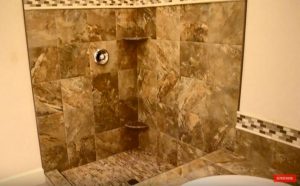
Years ago I decided to re-tile a custom ceramic tile shower. In that
particular situation the job of removing ceramic tiles was very straight
forward, since I wasn’t interested in saving the tiles. I simply used a
hammer and a large thick chisel to remove them. Wearing safety glasses and
gloves I hammered the chisel underneath the edge of each tile until it
popped offer the surface of the cement backerboard. In most cases each
tile came off hole. Only in a few cases did they break. I also did not
remove any grout prior to removing the tiles.
If you do not have matching or replacement tiles associated with a tiled
surface it may make sense to remove all the tiles and start over with new
tile. Again, the work of removing an entire surface area of tiles is
easier than removing a few.
|
|
In the event you do have replacement or matching tiles and you simply
want to remove a single tile or two, then start by removing the grout
around the tile(s) that you want to remove. To remove the tile grout
from between the tiles of interest, I recommend using a tool such as
the
Dremel MultiPro Cordless 7700-02 20,000 RPM Two-Speed 7.2V Rotary Tool System w/50 Accessories .
The dremel tool will make short work of removing the grout. Note that
the grout does not hold the tile in place so do concern yourself about
the tiles falling off the wall as you remove the grout. A thinset
mortar or adhesive on the back of the tile holds the tile in place. |
After removing the grout, use a flexible putty knife to worry
underneath one corner of the tile you want to remove. As you work the
putty knife into the corner, begin to slide it around the edge of the tile
working it deeper behind the back of the tile. Use your hammer and gently
tap the handle end of the putty knife to push the knife further behind the
tile. Once the blade is about a third of the way behind the tile begin to
gently twist the putty knife handle to lift the tile away. Eventually the
tile will pop off. You may need to work the putty knife further around the
tile perimeter a bit to help loosen it up sufficiently to have it pop off.
Once you’ve removed the tile(s) make sure to scrape away any residual
thinset mortar or adhesive until it is smooth. Then vacuum away any dust
so that the surface is completely clean. Finally, apply thinset mortar or
adhesive to the back of the replacement tile and insert it in place. When
the tile has fully dried in place, you can apply grout and grout sealer to
finish the tile repair.
|
Find a Qualified Ceramic Tile Contractor in Your Area |
|
Get Free Quotes. Easy, Quick and No
Obligations!
For the home improvement or home remodeling project that is
too big for you, check out our partner
NeedContractor. They are a national
resource for finding pre-screened, insured, and licensed home improvement and remodeling contractors in your local area.
|

|
|
Get Matched in 48 hours with Ceramic Tile
Contractors! |
See HomeAdditionPlus.com's
Ceramic Tile Calculator for your Ceramic
Tile Project
How to Finance your Home Improvement Project -
can help provide funds for your new home improvement project if financing is
required.
Related Ceramic Tile Information
Additional Ceramic Tile Resources from Amazon.com
|
|
|