|
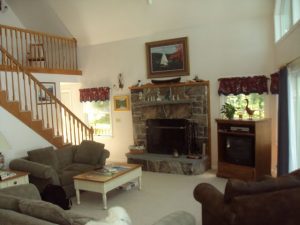
Frequently veneer brick or stone is
attached to the wooden structure inside the home to give the appearance of a
brick or stone fireplace.
Another advantage of zero clearance
fireplaces is that they do not require a hearth, though for aesthetic reasons
you may want to include one in the design of your fireplace.
Besides being much less expensive in
terms of material and labor installation costs, Zero clearance fireplaces
typically are much more energy efficient than traditional masonry fireplaces.
Zero clearance fireplaces can be up to 70% efficient due to the fact that they
operate hotter and thus can more fully burn the combustible fuel and pollutant
byproducts. A traditional masonry fireplace, on the other hand, typically does
not get hot enough to fully burn the fuel’s pollutant byproducts, and is thus
less energy efficient and releases more pollutants into the atmosphere.
Zero clearance fireplaces are also
lower maintenance, particularly if they are burning gas.
|
|
Key
Considerations when Selecting a Zero Clearance Fireplace
When choosing a zero clearance
fireplace there are a couple of key aspects that should first be considered.
One important aspect is the size
of the firebox opening. It is important to select a zero clearance firebox
opening that is sufficient to properly heat the room that the fireplace is
located in. If the firebox is too small the fireplace will not adequately
heat the room, and if it is too large you will experience unnecessarily high
energy bills. |
Another major consideration is the
level of heating efficiency desired. Zero clearance fireplaces are available
with and without heat exchangers and blowers. Depending on the intended use of
the fireplace you may or may not want to consider the added cost of purchasing a
zero clearance fireplace with built in heat exchangers and blowers.
Finally, though zero clearance
fireplaces require less space they still do require a chimney, albeit a smaller
steel chimney. This said, the location of the fireplace within the home is an
important aspect to consider, particularly from the chimney installation
standpoint. Also, it is wise to not have the fireplace located in a busy area of
the room. Typically the fireplace should be located on an outside wall or in the
corner of a room. If, on the other hand, the fireplace is desired to be located
in the center of a room, more thought needs to be given to the installation of
the chimney, particularly the cost. Upper level living space may need to be
eliminated and holes cut in the upper level floors and roof which will add to
the overall installation cost of the fireplace.
For information on maximizing your
wood stove’s home heating efficiency see
the “Installation
of Hood over Wood Stove Ebook”.

Find a Pre-Screened Heating Contractor in Your Area
Related Articles
Fireplace and Wood Burning Stove Information from Amazon.com
Zero Clearance Fireplaces and Wood Stoves from Amazon.com
|