|
|
A stone fireplace can add beauty and
ambiance to a home, particularly if it is centrally located in large cathedral
ceiling great room or other large living space area. Due to the fact that stone
is a natural material, stone fireplaces never seem to go out of style. Also,
stone, like water, represents one of the basic components of nature, and as a
result, I think deep down all of us gravitate towards these basic elements.
|
|
Natural Stone
Fireplaces
Stone fireplaces are constructed out
of natural stone or faux stone. A natural stone fireplace frequently uses stone
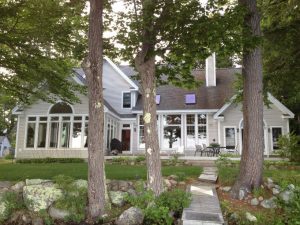
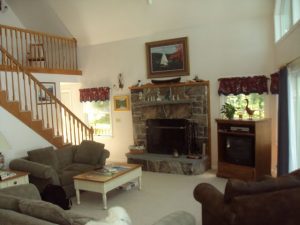
material found around the job site or area. Years back I had a stone fireplace
constructed in my home on Lake Winnipesaukee in New Hampshire, and all of the
material used was fieldstone picked out of local fields. Using local stone helps
to save on the construction costs, but that said a natural stone fireplace still
costs several times more than a standard brick fireplace.
|
|
Faux Stone
Fireplaces
Faux stone is also commonly used
today for stone fireplaces. Faux stone comes in all shapes, sizes,
colors and patterns and does a great job of mimicking the look and feel of
real stone. Faux stone is available in river
rock and flagstone appearances, as well as many other types and sizes. Faux stone is also
less expensive and easier to install as it comes in consistent shapes and
sizes. Stone fireplaces constructed out of natural stone on the other hand,
require a significant amount of extra work cutting and/or shaping the stones
to fit.
|
Stone Fireplace Construction
Stone fireplace construction is done very similar to a
standard brick fireplace. Cement block is used to construct the chimney, and
brick and/or cement block to construct the firebox area. The stone is then
added as a veneer to the surface of the chimney and hearth area to create
the finished stone fireplace.
Stone fireplace fireboxes can be constructed in a variety of shapes and
sizes, however the Rumford style firebox is quite commonly used. |

Photo by Mark Donovan |
A Rumford style helps to eliminate
deep dark corners and display more of the flames associated with the fire.
In regards to stone fireplace hearths bigger seems to be a common theme, however
it doesn’t have to be. This said, it is a nice touch to have a large hearth that
is elevated up a foot or so off of the floor to allow people to sit comfortably
next to the fire. I used a large slab of bluestone for the actual hearth cap as
it created a comfortable seating area and complemented the fieldstone.
Likewise stone fireplace mantles are typically larger than the standard brick
fireplace. Again, this doesn’t have to be the case, but because the stone used
in stone fireplaces is typically larger than brick it only makes aesthetic sense
to include a larger mantle.
Depending upon your budget and personal preferences, inside the home the stone
fireplace can be constructed to either go all away up the height of the back
wall, or only partially up.
Stone fireplaces can be more porous than brick and a little more difficult to
seal around on the exterior of the home, however this said with the proper use
of water sealers and caulk you should be able to prevent any water leakage or
seepage into the home.
So when interviewing potential stone masons talk with them about the appropriate
size and scope of your stone fireplace. It is important not to create an
albatross within your home, but on the other hand you want the stone fireplace
to be a focal point in your home. Make sure to also include conversations with
the stone masons about local building and fire codes for stone fireplaces so
that you don’t run into any negative surprises with the building inspector after
the stone fireplace is constructed.
For information on maximizing a
wood stove’s home heating efficiency see
the “Installation
of Hood over Wood Stove Ebook”.

Find a Pre-Screened Heating Contractor in Your Area
Stone Fireplace Accessories
from Amazon.com
|