|
|
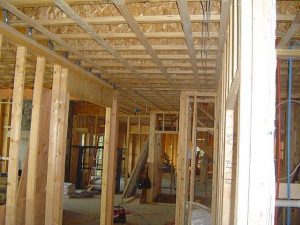
Framing basement
walls can be a tricky endeavor. There are a number of different situations and
obstacles that complicate the framing. As a result, stick building and
improvisation are the key phrases when undertaking framing basement walls.
Perimeter Basement Wall Framing
First, if you are
planning to have a warm and comfortable basement, perimeter basement walls
should be framed using 2”x4” construction, just like the interior walls. By
using 2”x4” studs on the perimeter basement walls insulation can be installed to
ensure a warmer room.
|
If warmth is not a priority, and the
installation of drywall is still required on the perimeter basement walls, then
furring strips can be attached to the perimeter walls instead. Furring strips usually consist of
2”x2”s that are glued and nailed to the concrete basement walls.
Internal Basement Wall Framing
The internal walls can be built on the ground and then simply raised in
place, however due to inevitable variations in basement floor heights the walls
should be built slightly shorter and then shimmed into place.
| If this is not done, you may have some difficulty
raising the wall as it may get wedged between the floor of the basement and
the ceiling/floor joists. Also, if the home is built on clay soil the
basement floor may move slightly up and down based on the water content in
the ground. If the home is built on clay soil, then you should use
L-Shaped steel framing clips to attach to the walls and the first-floor
floor joists. |
 |
These clips will enable the basement walls to breath (move up and down), but give the
support necessary to ensure the wall remains vertical.
When framing basement walls there are typically many obstructions (pipes,
duct work) that you need to build around. Thus, it is sometimes easier to stick
build walls around these types of obstructions.
|
Find a Qualified Basement Remodeling Contractor in Your Area |
|
Get Free Quotes. Easy, Quick and No
Obligations!
For the home improvement or home remodeling project that is
too big for you, check out our partner
NeedContractor. They are a national
resource for finding pre-screened, insured, and licensed home improvement and remodeling contractors in your local area.
|

|
|
Get Matched in 48 hours with Basement Remodeling
Contractors! |
Stick Build Framing of Basement Walls
To stick build basement walls, first nail a top plate perpendicular to the
floor joists. Next, secure a bottom plate to the concrete floor using concrete
nails and an adhesive such as Liquid Nails. Make sure you use pressure treated
lumber on the bottom plate as it is in contact with the concrete and will wick
moisture over time. The top and bottom plates should be parallel to each other.
Use a plumb line to ensure they are parallel.
|
|
Finally install 2’x4” studs every 16”
along the plates. Make sure you measure for each stud prior to cutting, as the
floor to ceiling distances will vary.
Boxing in Ductwork when Framing Basement Walls
Soffits may need to be built if ductwork needs to be boxed in or if planning
to install interior lighting. Soffits are not structural and thus can be framed
using 2”x2”s. Similar to any wall framing, use two parallel 2”x2” plates and
connect them using vertical stud members. Secure a 2”x2” top plate to the floor
joists and then stick nail in a 2”x2” stud on both ends of the top plate.
|
Next nail the bottom plate to the two studs to create the basic wall.
Finally, install on 16” centers, 2”x2” studs along the entire length of the
plates. Pending the situation you may need to build the same framing structure
on the other side of the ductwork. Once you have completed the second soffit
wall simply install 2” x 2” cross member stud pieces (lookouts) between the two
soffit wall sections. You will want to make sure you use a chalk line and a
level during this task to ensure the soffit walls remain straight. Again, as the
soffit is being stick built, measure every stud prior to cutting.

Framing the Ceiling
If drywall is to be installed on the ceiling then you may need to add
effectively a horizontal wall. Basically the same process is done as with
building soffits, however 2”x4”s are used for providing clearance for pipes
hanging below the floor joists. If there are no pipes or wiring hanging below
the floor joists, then 1’x3” strapping may be able to be used. Simply nail them
perpendicular to the floor joists on 16” centers.
For more help on Finishing
Basements, see HomeAdditionPlus.com's
Basement Remodeling Bid sheet. The
Basement Remodeling Bid Sheet will help
ensure that your hire the right contractor so that your basement remodeling
project is done
correctly and you get the project finished on time and budget.
How to Finance your Basement Remodeling Project -
can help provide funds for your new home improvement project if financing is
required.
Related Basement Remodeling Information
Additional Basement Remodeling Resources
Get Free Basement Remodeling Price Quotes
with
No Obligation!
Fill out our 3-5 minute quick and easy form, and receive a free price quote
on basement remodeling from one of our prescreened and licensed basement
remodeling contractors. This process is free and there is no obligation to
continue once you receive your basement remodeling price estimate.
|