HOME ADDITION PLUS

Helping Homeowners Every Day


                      Home   How-To   Store   Ebooks   Bid Sheets   Add House   About   Contact   Search   Subscribe to Newsletter  


New Home Construction Bid Sheet 
A must have if

hiring a contractor!

House Plans  


Home Improvement Tools from Amazon


Visit My

Amazon

Tool Store


Ceramic Tile Underlayments - The Basics

By Carlo Morelli

Ceramic tile material is rigid and relatively brittle, so a sturdy base is the most critical part of installing this type of tile. Unless you want to see cracked tiles, loose tiles, or loose grout, you need to select the proper underlayment. Underlayment being what the construction trade calls the layer that goes between your wood subfloor and your tiles.

You have several alternate ways to accomplish the strong underlayment required for ceramic tile installation.

Plywood- just a single layer of plywood isn't rigid enough to stop floor deflection. It needs to be covered over with an additional layer of exterior-grade plywood to achieve a total thickness of at least 1 1/8 inch. You can either (A)- Cover the plywood with a cement backer board (more on these below) or (B) Cover the existing plywood with a second layer of exterior grade plywood. Under either of these, a thin-set mortar is applied to eliminate air gaps.

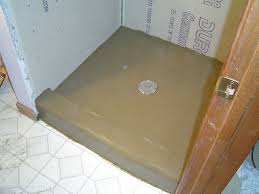
Additionally, in bathrooms, it's recommended to lay a "shower pan" over your wood subfloor. This refers to thin rubberized materials that protect the tile from floor expansion and contraction due to moisture, temperature and humidity.

Cement Backer Board - These are prefabricated, lightweight concrete sheets used to cover wood subfloors. It has a dense Portland concrete core and fiberglass surfaces both sides and is able to withstand prolonged exposure to moisture. Brand names include DUROCK, UTILICRETE, WONDERBOARD and GLASCRETE. Joints of the backer board sheets should be staggered such that they don't fall directly over the wood subfloor joints.

Mortar Bed- Mud beds, or mortar beds, are used by professional tile contractors mostly. They're composed of a layer of thick roofing felt, then wire mesh, followed by a layer of mortar. The reason it is used mostly by the specialists is that it takes a high level of skill and practice to ensure the mortar bed produces a sufficiently level surface. The other reason is that it is the best foundation possible for a ceramic tile floor. Okay, but why? Because the mortar bed has a built-in reinforcement against floor deflections in the form of the wire mesh. Translation- less cracked tiles and loose grout, and longer-life flooring.

Need Tile Contractor Image

Find a Pre-Screened Ceramic Tile Contractor in Your Area

Concrete Slab- You can lay your ceramic tile directly on concrete slab, but all cracks and holes need to be refurbished prior before the installation of a tile when it's directly bonded to the concrete. Some concrete slab has been coated with curing compound to help the slab set without cracks. This compound should be removed before tile installation to ensure a long-lasting mortar bond, since the compound helps the concrete retain moisture and in some cases affects adhesiveness. It is also important that the slab be as level as possible, especially with the larger tile sizes in use today. Cleaning the concrete completely of debris and dust will also contribute to a higher quality installation. In short, preparation of the surface is key.

One other possibility is laying the tile over existing flooring. There are a few things to consider. Is your existing floor solid, flat and in good shape? Is it stuck well enough to the subfloor under it to provide support? Good. Is the existing floor linoleum or vinyl? Not so good. You need to strip it out or put a good subflooring on top of it. (And watch out for older vinyl flooring, which may contain asbestos fibers. You don't want to strip this stuff out yourself. Instead, either cover it up with some plywood subfloor or have a contractor remove it. If you aren't sure if your flooring has asbestos, call in a trained asbestos inspector.) If you have ceramic tile on the floor you can lay newer tile on top of it as long as it's surface is level and not too smooth. You might need to sand the surface to let your bonding have a better chance.

In conclusion, a little planning and thought will go a long way toward making your tile installation project a long-lasting addition to your home, so take the time before you go in with "both guns blazing".

About the Author - Carlo Morelli is a contributing author at www.OnlineTips.org, where you can find tips about fiberglass insulation installing and how to seal tile grout

See HomeAdditionPlus.com's Ceramic Tile Calculator

How to Finance your New Home Project - FirstAgain can help provide funds for your new home improvement project if financing is required. Apply online today!

Related Ceramic Tile Information


Additional Ceramic Tile Resources from Amazon.com

 
     Setting Tile Book Image  

Building the kitchen of your dreams doesn’t have to be a long, drawn-out process. We can help you get started today. In just seconds, we’ll search our pre-screened network to find a well-established kitchen remodeling company with the right combination of service and products you’re looking for. [Learn More]


- Ceramic Tile Underlayments : The Basics -

[Back to Tile, Stone and Stained Glass]


Subscribe -  Subscribe to HomeAdditionPlus.com feed via Google  Subscribe to HomeAdditionPlus.com feed via MyYahoo  Subscribe to HomeAdditionPlus.com feed


to HomeAdditionPlus.comVideos   - 

Advertise @HomeAdditionplus.com / Favorite Links / SiteMap / ToS

Copyright 2005-2008 by DIY HomeAddition Plus.com - A Do it Yourself Home Improvement Site

webmaster

web metrics