When we look for a dream home, we have visions of a palace that will
always look immaculate and never need fixing. Somewhere where the
gutters are always free of leaves and the paint never peels. The
reality is that once the house is bought, constant maintenance is
needed until the kids are old enough to do chores.
|
|
Choosing new over old doesn't help or absolve a buyer of the
responsibility for routine maintenance either - it merely delays the
process. Old-house buyers know that they aren't buying perfection,
whereas new-house owners want everything to remain new forever, and
they are always disappointed.
Regular maintenance not only saves you money, but by keeping things
in good shape and in working order, there will be fewer problems to
tackle when you finally decide to put the house on the market. Most
major repairs can also be avoided with simple seasonal maintenance. |
Autumn (fall) and spring are ideal times for such tasks since those
seasons come on either side of winter, which is usually when the
lack of maintenance is most apparent. Spring also leads into
barbeque weather so the house needs to look good for the guests.

The lead-up to winter is possibly the best time to take on serious
repairs, especially if you live in a snow-bound or freezing winter
climate. Simple repairs can help keep the cold out and the heat in
as well as ensuring that no damage is done by freezing pipes or
blocked drains. Winter is also the best time to take on problems
that could require the services of experts, such as roof work,
chimney pointing, gutter replacement, or furnace repairs.
Most jobs can be handled easily enough without hiring a
professional, but it is a good idea to ask a few questions before
undertaking a task. Most hardware stores can provide all the advice
you need and if you do have the plumber or roofer around it is a
good time to ask for some tips. To begin, list potential problem
spots. Then inspect the house, note where repairs are necessary and
establish priorities.
Don't be roof-less. Most problems associated with winter result from
the accumulation of ice and snow. On roofs, for example, if the snow
is heavy enough and frigid air remains locked in, snow will melt
while the sun is shining and then freeze after sunset. This creates
ice dams, which often lead to leaks in drywall and plaster ceilings
and walls, and require costly repair or replacement.
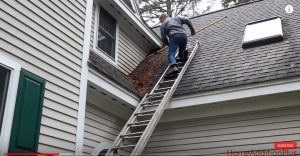
If your roof tends to develop these dams, you might need
professional advice to prevent them. Therefore, the roof should be
inspected and any loose tiles or shingles fixed or replaced and any
cracks around the seals near the chimney repaired.
Tree limbs that hang over the roof also can be a potential problem,
especially in ice and wind. If you can reach the limbs safely, trim
them away from the house and make sure that none is hanging over the
electrical, telephone and cable lines coming in from the street to
your house.
Checking the gutters and downspouts is probably something best done
at the end of summer before the fall comes and leaves start to cover
everything. Sometimes they pull away from the edge of the house or
get out of alignment or are simply clogged with junk and dirt. Clean
leaves and other debris from the gutters and repair any holes that
have developed in the trough, you might also want to install
screening or gutter guards.
Winter is the perfect time to plan home improvement projects as it
will leave all spring and summer to complete the job. Plan and
budget major projects, such as painting the exterior of the house,
building a patio, or making landscape changes. There is also time to
check with your local building department to see if your projects
require permits and to obtain bids from contractors without having
to rush a final decision before winter kicks in.
After winter, it is time to see how all the pre-winter repairs held
up by looking for sagging gutters, loose window frames or siding,
deteriorating concrete or brickwork, missing roof shingles, water
damage or rust. Dealing with any damage quickly will stop any
further decline and will make last-minute repairs easier. It also
means being able to avoid the autumn rush on repairmen.
Repair any broken fence boards and paint or seal them as needed.
Clean the pool if it has been covered all winter. Check exterior
walls for holes or cracks; patch and paint as necessary. In fact,
why not take the opportunity for some general spring-cleaning? Dust
walls and ceilings, wash window curtains, and dry-clean drapes that
have had no airflow all winter. Clean rugs and carpeting, dust and
polish wood or laminated floors, and polish woodwork. Clean the
garage and bring out the garden tools and lawn mower. They'll remind
you of their presence and the wild thicket that was once your garden
until you do something about it.